> For the complete documentation index, see [llms.txt](https://manual.selarti.com/llms.txt). Markdown versions of documentation pages are available by appending `.md` to page URLs; this page is available as [Markdown](https://manual.selarti.com/manual-en/external-integrations/integration-using-the-albato-service.md).
# Integration using the Albato service
[*Albato*](https://albato.ru/?_ga=2.31799486.1218008386.1736919597-1080970657.1736919399) *— one service for all integrations. Allows you to set up integrations in minutes without involving developers.*
You can set up an integration with any external service. Selarti will send a webhook to the external system when the AI agent receives contacts or consent for the target action.
For example, the AI agent has agreed on a video meeting, after which a deal will be automatically created in your CRM system, and a message with all the necessary information will be sent to the managers' chat.
### Setting up integration through the Albato service
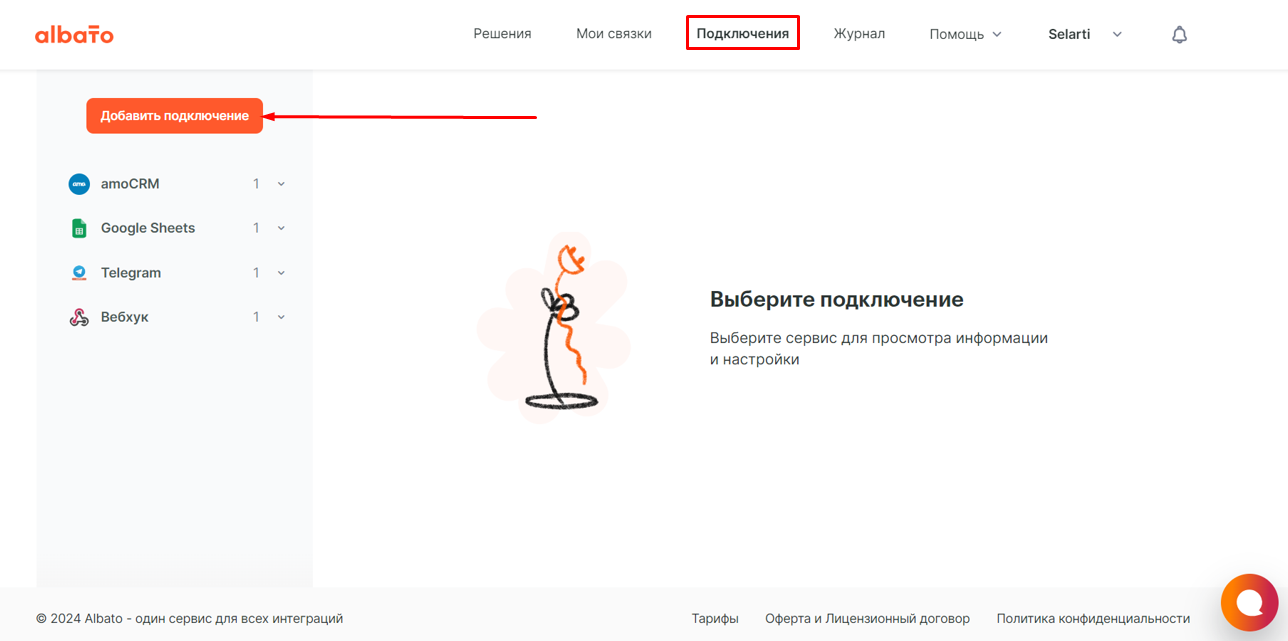
1. Register in [**the Albato**](https://albato.ru/) service, go to the «*Connections*» and click «*Add connection*».
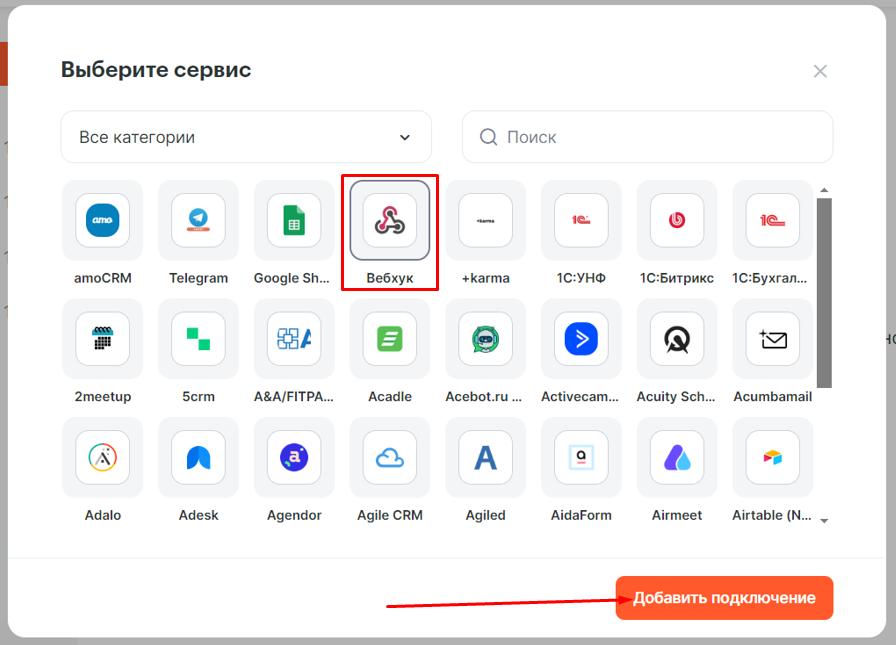
2. Choose the connection type «*Webhook*» and click «*Add connection*». Then click «Next» everywhere.
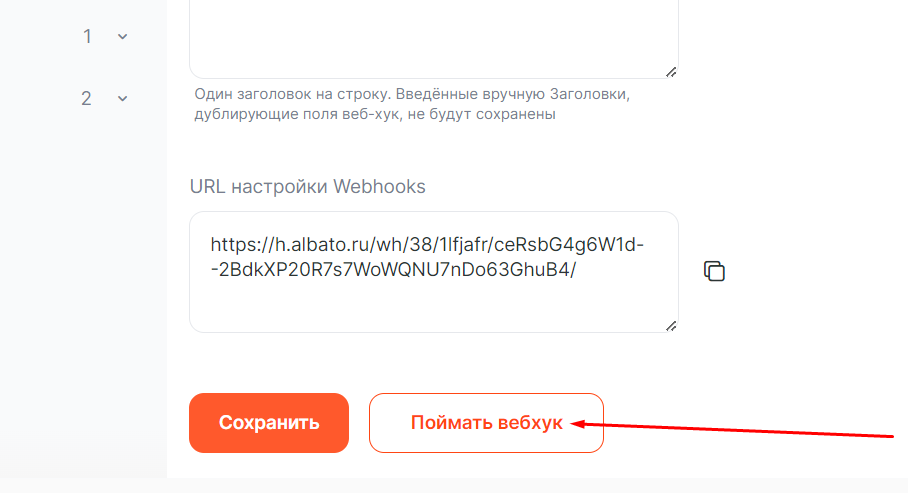
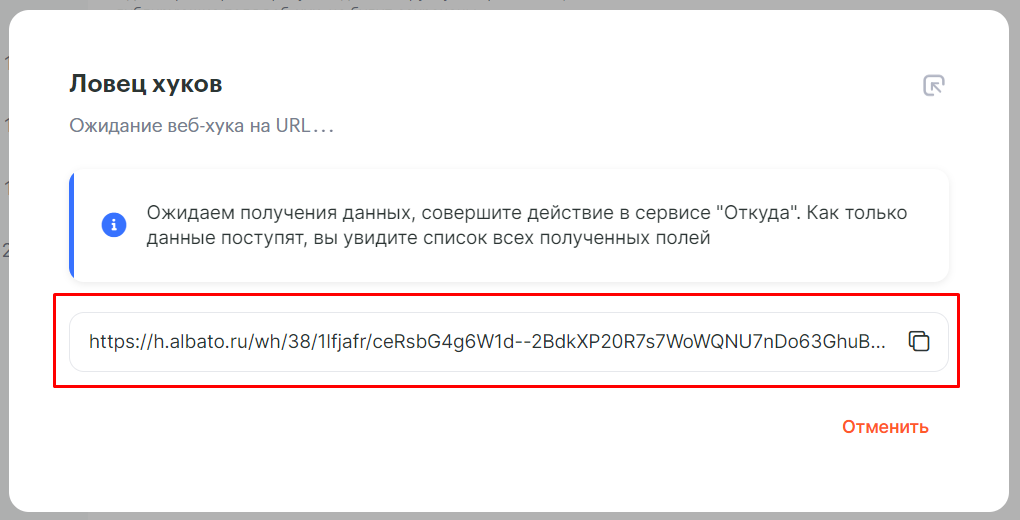
3. When the connection is created, click the «*Catch webhook*». After that you need to click «Wait for webhook».
4. Copy the link and go to your Selarti account.
### Settings in the Selarti account
1. In the left side control panel, go to the «[*Integration*](https://selarti.com/panel?menu=integration)», in the top right click «*Create integration*». Choose the integration type «*Albato*».
2. Enter your name, then paste the link copied from the Albato account. Click «*Send test webhook*»*.*
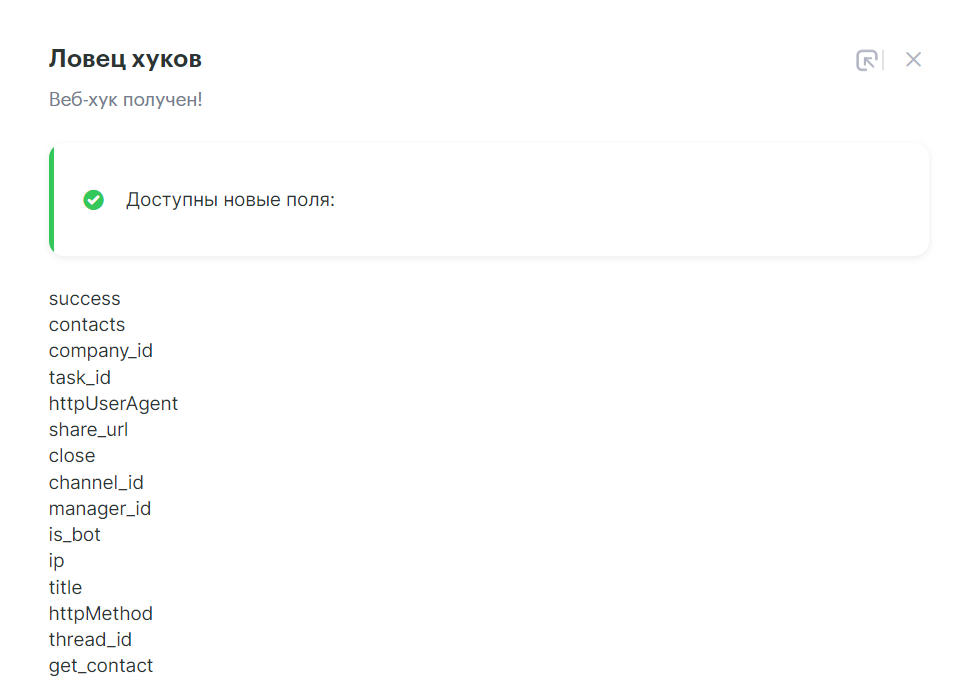
If you did everything correctly, Albato will display available fields, and the entered link in Selarti will be highlighted green.
3. Select the required tags and click «*Create integration*»*.*
### Adding a webhook in the Albato service
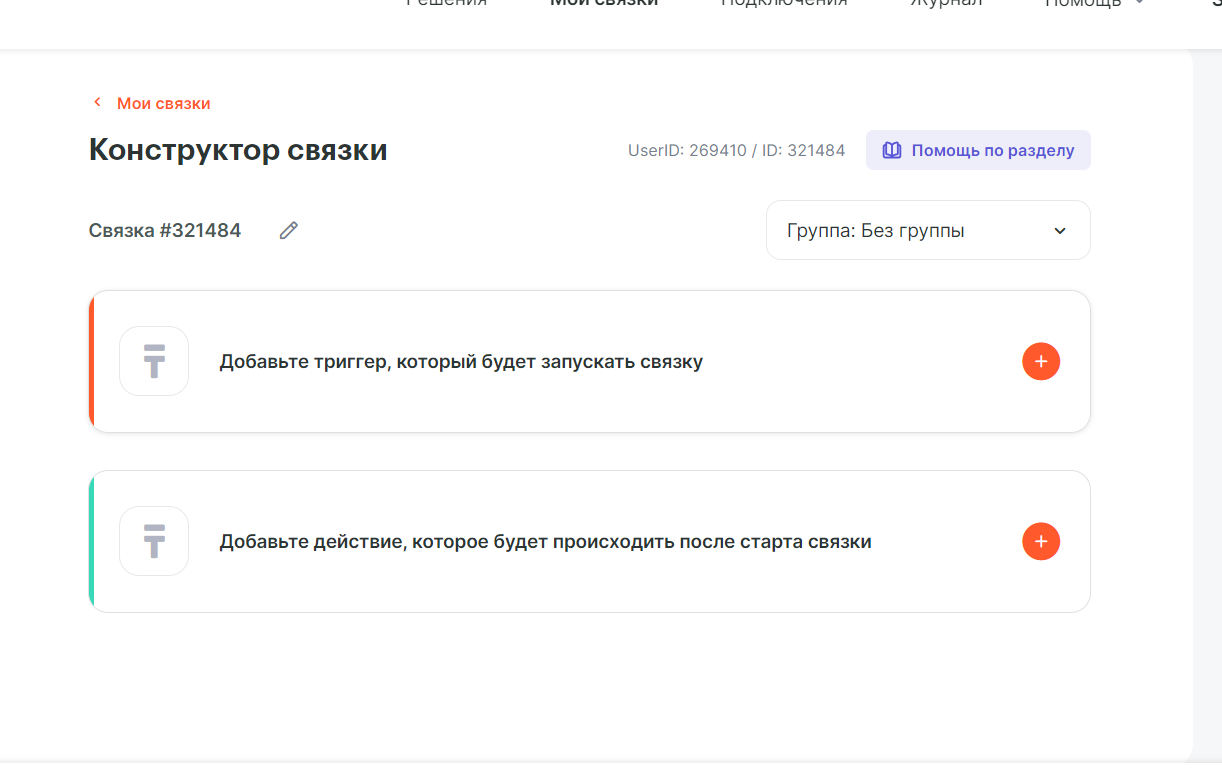
1. Go to Albato, in the «My flows» section click «Create new flow»*.* The flow builder will open.
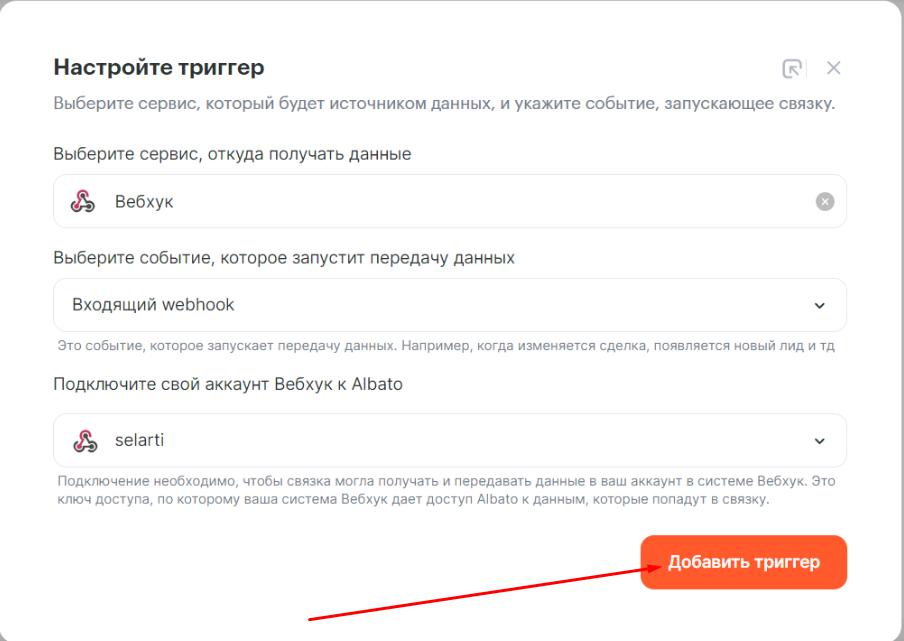
2. Add the webhook created above as a trigger and click «*Add trigger*»*.*
3. Create an action. There can be many options, Albato supports a large number of actions. More about each setting [**here**](https://blog.albato.ru/category/instrukczii/)**.**
Done!
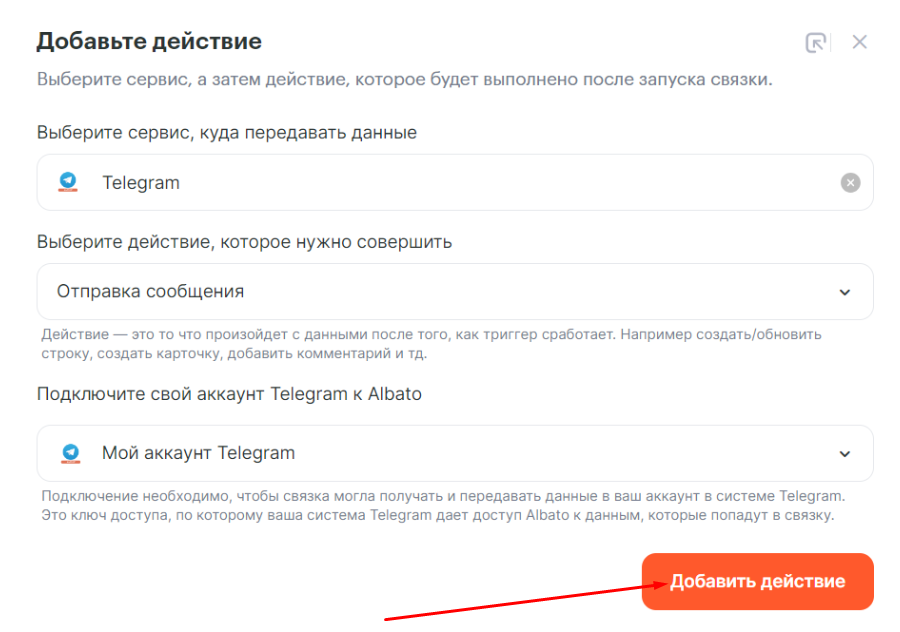
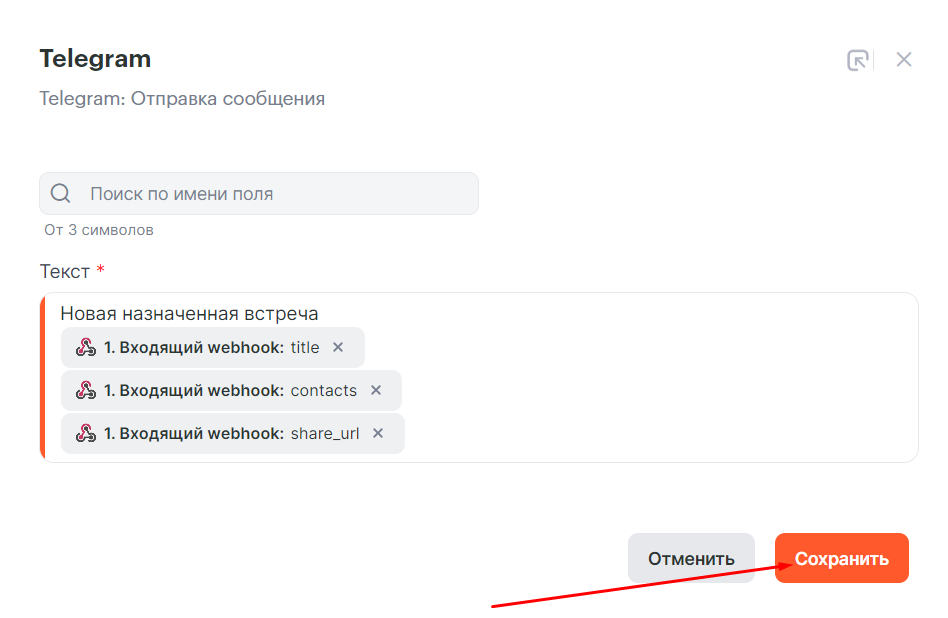
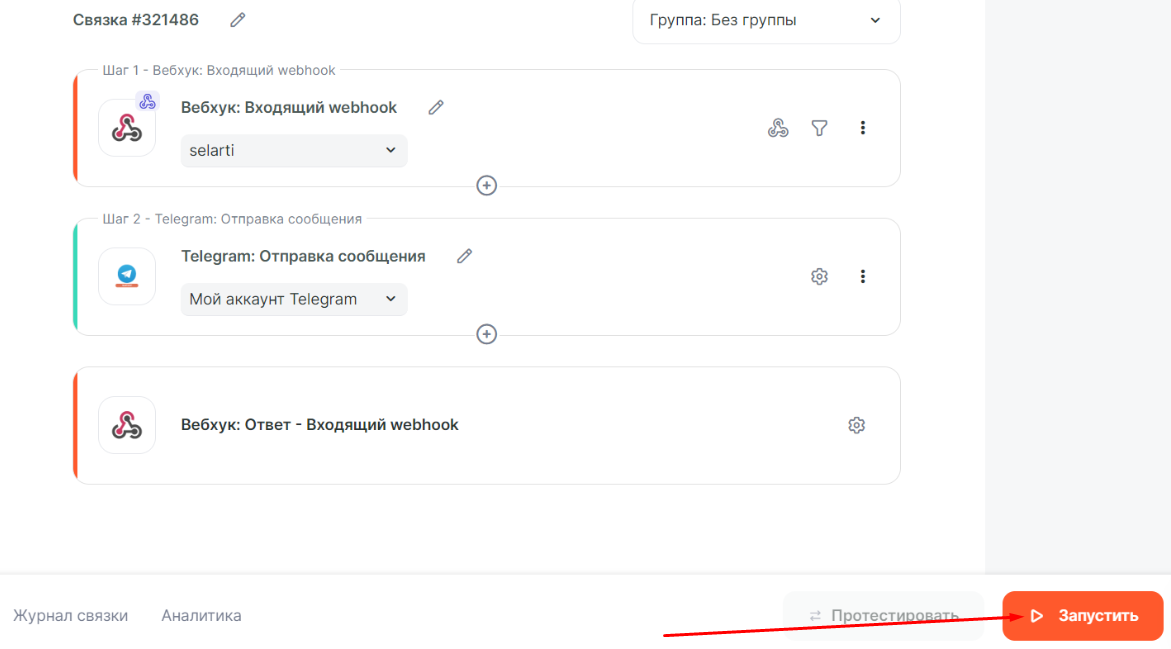
#### Example of setting up a notification in Telegram
1. After creating the action, choose the necessary settings and click «*Add action*».
A window with settings will open, make the necessary settings and click «*Save*»*.*
After you configure the actions, click the «*Run*»*.*
### Description of webhook fields
**`title`** — dialog title (First Name Last Name/profile name).\ **`contacts`** — interlocutor's contacts. Phone, username.\ **`success`** — the AI agent marked the dialog as successful (yes/no).\ **`get_contact`** — the AI agent obtained additional contacts of the interlocutor (yes/no).\ **`close`** — dialog closed (yes/no).\ **`is_bot`** — dialog identified as a bot (yes/no).\ **`share_url`** — link to view the dialog.\ **`company_id`** — Company ID.\ **`task_id`** — Task ID.\ **`thread_id`** — Dialog ID.\ **`dialog`** — AI dialog with the user as text.
We can add additional fields from the list of standard ones. If you think there are fields that all clients need — write to [support](https://t.me/selarti_support_bot).\
You can add custom fields for yourself using [custom API](/manual-en/main-sections-of-the-service/ai/ai-functions.md).